



Slow Mo Strike: Knives in Time review
 Analysis by GetAllApps
I can see why Slow Mo Strike: Knives in Time catches the eye: it turns a tiny action-game idea into a focused test of timing and drawing. You trace a path, let the action unfold, and watch a burst of knives follow the line you planned. That simple premise makes an appealing first impression, especially when I want a quick game that asks for attention without asking me to learn a complicated control scheme.
What matters more than that opening novelty is whether the central action stays enjoyable once it is familiar. For me, this is best approached as a compact reflex-and-planning game, not as a sprawling action adventure. Its appeal rests on the pleasure of shaping a move and seeing it resolve, so players who enjoy short, hands-on challenges are more likely to keep returning than anyone looking for a long campaign or a rich set of systems.
Why the opening sessions work
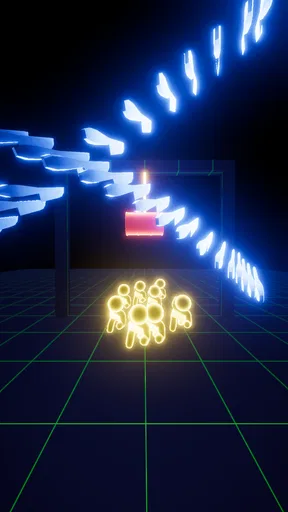
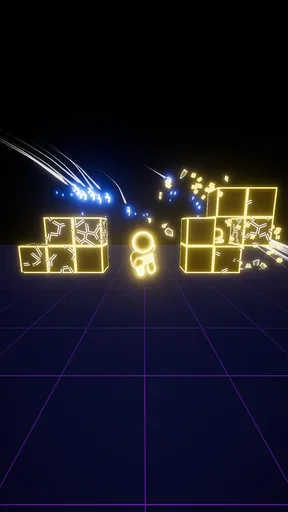
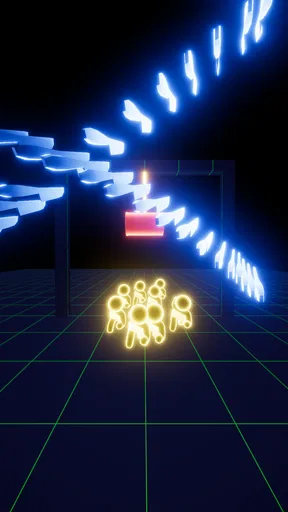
The game is an action title from KAYAC Inc., and its main idea is immediately legible: time slows while you arrange a knife attack, then the motion plays out. That pause between planning and release gives the action a satisfying rhythm. Rather than relying only on frantic tapping, it invites a small decision—where to draw, how to direct the strike, and whether the line you chose will do what you expect.
The store summary refers to releasing all 30 knives in one burst, which gives the concept a clear, emphatic payoff. I would treat that as the central fantasy rather than assume every moment is a complex tactical puzzle. The fun comes from the contrast between deliberate tracing and sudden action. When the timing and path come together, the result feels more personal than simply pressing an attack button.
A practical tip is to make each attempt answer one question. If a trace feels awkward, change the direction or shape on the next go rather than trying to redesign everything at once. That keeps the feedback useful: you can tell whether a different path improved the result, instead of leaving the session unsure what caused the change. This kind of small, repeatable experiment is where the game’s basic mechanic has the most room to feel rewarding.
It is also a natural fit for brief breaks. I can imagine opening it while waiting for a friend or filling a few spare minutes between errands: the premise is quick to understand, and the interaction centers on a direct action rather than a lengthy setup. That does not mean every player will find it calming. The slow-motion presentation may look measured, but the satisfaction depends on getting the move to land, so it still suits someone who wants a little concentration.
Its early appeal is helped by how little explanation the concept needs. There is no need to memorize a large roster of controls before the central interaction makes sense. That accessibility is a genuine strength for casual players, while the flip side is that the core loop has to carry most of the experience. If tracing and releasing do not feel good to you, a more varied action game will probably offer a better first-week experience.
How it fits beside other action games
Compared with the usual action-game alternatives, this is less about constant movement and more about composing a single attack. A conventional action title may reward navigation, repeated combat decisions, or sustained progression; this one concentrates attention on the drawn line and its release. That makes it a useful change of pace, but not a substitute for games built around exploration, lengthy stages, or a wide range of combat tools.
I would recommend trying it with a specific expectation: enjoy the small moment of planning, then judge the result. Players who like gesture-based interactions may find that more satisfying than button-heavy combat. Players who want a lot of different actions to master may instead find the focus restrictive, even if they enjoy the first few bursts.
Whether it earns repeat sessions
The longer-term question is whether the same loop continues to feel worth opening after the first surprise wears off. My view is that its recurring value depends less on a large checklist of activities and more on how much pleasure you get from refining a simple action. If you enjoy noticing that a cleaner trace changes the outcome, the game can work as a small repeatable challenge. If you need fresh mechanics or a strong sense of advancement to stay engaged, the novelty may fade sooner.
A useful way to avoid tiring of it is to keep sessions short and purposeful. Rather than playing until the gesture feels automatic, I would stop after a handful of attempts and return later. That makes the game a better fit for spare moments than for a long evening of uninterrupted play. The small-session approach also gives the central action room to remain satisfying instead of turning into a repetitive motion.
There is a trade-off here between clarity and variety. The focused design makes it easy to understand what you are trying to do, but it also means the game’s long-term appeal must come from the execution itself. I would not choose it as my main action game if I were in the mood for a changing sequence of objectives. I would choose it when I wanted one concentrated interaction that I could pick up without a long warm-up.
For an everyday use case, it makes sense as a short reset during a busy day: open it, try a few deliberate traces, and put it away before the repeated action becomes dull. It is less suited to a commute where you need to keep watching your surroundings, or any moment when you cannot give the screen your attention. The line-drawing premise asks for focus at the moment of play, even though the idea itself is easy to grasp.
Keeping it installed without turning it into a chore
Maintenance, in the everyday sense, appears light: this is a compact game concept rather than a tool that calls for regular setup or ongoing organization. Its current version is 017, and it is listed for devices running Android 5.1 or later. Those details make it easier to judge basic compatibility, but they do not tell me how often someone will want to return; that depends on whether the short action loop matches their habits.
The game is free, which lowers the barrier to trying it, but free access does not automatically make it worth keeping. I would decide after a few separate sessions, not just the first burst of excitement. Ask whether you still want to improve a trace once the surprise has passed. If the answer is yes, its small footprint in your routine may be worthwhile; if you keep opening it only out of habit and feel little satisfaction, there is no reason to force a daily ritual.
Its Teen content rating is also useful context for deciding whether it suits a household. I would still use ordinary judgment about who is playing and what kinds of action games they enjoy, rather than treating an age label as a guarantee that every player will like its presentation. The game’s defining appeal is the knife-themed action, so that premise should be comfortable for the person using it.
There is no need to build a complicated practice routine around a game this focused. A better approach is to use it when you actually want a quick timing challenge, and to leave it alone when you would rather play something with more variety. That is a small but important distinction: repeat value is not the same as endless content, and a game can earn occasional use without becoming a daily staple.
Where repetition can set in
The biggest source of fatigue is built into the same feature that makes the game easy to understand: the central action remains narrow. Once the novelty of planning a knife burst has settled, players may want more kinds of decisions than tracing a path provides. I would be cautious about expecting a deep progression experience from a game whose strongest hook is one clear gesture.
Another possible friction point is the gap between what you intend to draw and what you see happen. Gesture-led play can feel satisfying when the trace behaves as expected, but less so if you are looking for exact, highly technical control. My advice is to keep experiments simple and compare one change at a time. That helps distinguish a disappointing attempt from a broader mismatch between the control style and your preferences.
It is not the right choice for someone seeking a large action game with lengthy sessions, varied combat approaches, or a world to explore. A more traditional action title is a better pick when you want sustained movement and multiple decisions unfolding at once. Likewise, if you dislike repeating a small interaction to improve your feel for it, the central loop may become tiring even though it is easy to learn.
On the other hand, the same narrow focus can make it a welcome alternative to busy games that constantly demand attention. There is a particular pleasure in having one thing to do well, then seeing the result. I find that more appealing when I have limited time and want a quick, tactile challenge than when I am settling in for a longer play session.
Who is likely to keep coming back?
Slow Mo Strike has an average rating of 4.7 from around 11,000 ratings, and it has passed 5 million installs. Those figures suggest that the simple action premise has reached a substantial audience, but they should not decide whether it suits you. The more useful question is whether you enjoy tracing a move and judging the release, because that is the experience at the heart of the game.
I would put it on the shortlist for people who like short action challenges, gesture-based controls, and a clear payoff after a deliberate input. It may also work for someone who wants a casual game that is easy to pick up without committing to a long run. It is a weaker fit for players who need a wide range of mechanics, a deep narrative, or a reason to play every day beyond the central interaction.
My long-term verdict is cautiously positive: it earns space as an occasional, focused diversion rather than a permanent daily habit. The premise has enough character to make the first sessions engaging, and its direct controls leave room for small improvements in how you approach each attempt. But its lasting value depends on enjoying repetition with variation in your own execution, not on expecting a constantly expanding set of activities.
If that sounds like your kind of action game, I think it is worth trying while keeping expectations grounded. I would recommend it to a friend who enjoys a quick, satisfying gesture challenge and is happy to play in short bursts. If you want an action game that keeps changing what it asks of you, choose a broader alternative instead. For the right player, Slow Mo Strike: Knives in Time can remain an easy game to revisit—but it does not need to become a routine to be worthwhile.
Pros and cons
Pros
- Slow-motion effects make each successful throw feel dramatic.
- Simple controls are easy to learn.
- Short rounds suit quick play sessions.
- The knife-throwing theme gives the game a clear focus.
- Timing challenges can reward careful play.
Cons
- Repeated throws may feel monotonous over time.
- Progress can depend on precise timing.
- The gameplay offers limited variety.
- Missed throws can interrupt a smooth run.
- The theme may not appeal to every player.


